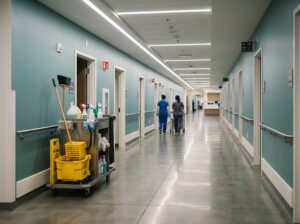
Your night crew leaves the building spotless. By 10:30 the next morning, the lobby glass has handprints, a restroom is out of paper towels, and someone spilled coffee by the elevator. Day porter services fill that gap. A day porter is a cleaner who works on site during business hours, handling the messes that build up while people are actually using the space.
We staff day porters for offices, clinics, and busy facilities, and the question we hear most is simple: what does a day porter really do all day? Here is the honest answer, plus how to tell if your building needs one.
What Is a Day Porter?
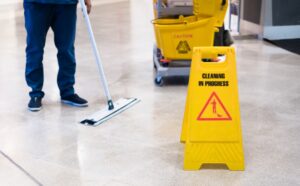
A day porter is a uniformed cleaning professional assigned to your building during operating hours. Instead of one deep clean at night, they work a route through the day, keeping high traffic areas presentable and catching problems before tenants, patients, or customers notice.
Think of it as the difference between cleaning a building and keeping it clean.
Day Porter Services vs. Nightly Janitorial
Most buildings that use a day porter still have a night crew. The two roles cover different jobs.
| Day Porter | Nightly Janitorial | |
| When | During business hours | After hours |
| Focus | Upkeep, restocking, spills, quick response | Full cleaning, vacuuming, trash, restroom deep clean |
| Visibility | Seen by staff and visitors | Mostly unseen |
| Best at | Keeping busy spaces presentable all day | Resetting the whole building for tomorrow |
| Typical schedule | Part day, peak hours, or full shift | Nightly or several nights a week |
If you are building out a full program, our janitorial cleaning services page shows how the night side fits in.
What a Day Porter Handles During the Day
Every route is built around the building, but these tasks show up on almost every day porter checklist we write:
- Restroom checks and restocking. Paper, soap, and sanitizer get refilled before they run out, and sinks and counters get wiped. Our restroom sanitation tips go deeper on this.
- Lobby and entry upkeep. Glass doors, front desks, and entry floors stay clean, which matters most in bad weather.
- Spill response. A day porter handles spills right away, which keeps floors safe and stops stains from setting.
- Breakroom and kitchen resets. Counters wiped, sinks cleared, coffee areas tidied, and trash emptied before it overflows.
- High touch surfaces. Door handles, elevator buttons, railings, and shared equipment get wiped through the day.
- Conference room turnover. Tables cleared and wiped between meetings so the next group walks into a clean room.
- Trash and recycling runs. Busy areas get emptied midday instead of waiting for the night crew.
- Exterior entrance sweeps. Sidewalks, entry mats, and smoking areas stay free of litter.
Pro Tip: Give your day porter a short list of “never let this run out” items, like paper towels in the main restroom or cups in the breakroom. Those small misses are what tenants notice first.
Who Benefits Most From a Day Porter
A day porter makes the biggest difference in buildings where traffic is heavy and appearance matters during the day:
- Multi tenant office buildings. Shared lobbies, restrooms, and elevators get the heaviest use and the most complaints.
- Medical and dental clinics. Waiting rooms and restrooms turn over all day. Steady wiping of touchpoints supports the routine cleaning the CDC recommends for facilities. See our clinic cleaning services.
- Corporate campuses and headquarters. Client visits, events, and executive floors call for a polished look at all hours.
- Warehouses and manufacturing sites. Breakrooms and restrooms used by multiple shifts need attention between the night cleans.
- Event and seasonal spikes. Open houses, board meetings, and flu season all bring extra traffic for a few weeks.
Building a Day Porter Schedule That Works
The right schedule follows your building’s busiest hours. Here is a sample route for a mid size office with a shared lobby.
| Time | Focus |
| Opening | Entry glass, lobby floor, restroom check, coffee area setup |
| Mid morning | Restroom restock, conference room resets, touchpoint wipe |
| Lunch | Breakroom and kitchen reset, trash run, spill checks |
| Early afternoon | Restroom check, lobby touch up, recycling |
| Late afternoon | Final restroom restock, entry floors, notes for the night crew |
Not every building needs a full shift. We set up day porter coverage in three common ways:
- Peak hour coverage. A porter covers the busiest few hours, often the morning rush through lunch.
- Part day coverage. Four to six hours spread across the times your building gets the most use.
- Full shift coverage. A dedicated porter for the entire business day, common in large or high profile buildings.
What to Look for in a Day Porter Provider
A day porter is the most visible person on your cleaning team, so the provider matters.
- Backup coverage. Ask what happens when your porter is sick or on vacation. A gap of even one day gets noticed.
- A written checklist. Tasks and frequencies should be on paper, not just agreed to on a call.
- Clear communication. Your building contact should know how to reach the porter and the supervisor quickly.
- Product training. Porters should know which products go where and follow label directions, including contact time for EPA registered disinfectants.
- A handoff with the night crew. The best programs pass notes both ways, so nothing falls through the cracks.
Start With Your Busiest Two Hours
You do not need to commit to a full time porter to see a difference. Pick the two hours when your building looks the worst, usually the morning rush or right after lunch, and start there. Most clients are surprised how much a short daily window changes what tenants and visitors see.
Mountain Group provides day porter services for offices, clinics, and facilities across the Twin Cities metro. We will walk your building, map out the busiest areas, and build a schedule that fits with your nightly cleaning. Call us at (952) 683-0955 or request a free estimate.
Frequently Asked Questions
What does a day porter do?
A day porter cleans during business hours. Typical tasks include restroom checks and restocking, lobby upkeep, spill response, breakroom resets, trash runs, and wiping high touch surfaces.
What is the difference between a day porter and a janitor?
A day porter works during the day and focuses on upkeep and quick response. A janitor usually works after hours and handles the full, deeper clean of the building.
Do I still need nightly cleaning if I have a day porter?
In most buildings, yes. The day porter keeps things presentable, while the night crew handles vacuuming, full restroom cleaning, and other work that is hard to do with people around.
How many hours a day does a day porter work?
It depends on the building. Coverage can be a few peak hours, a part day shift of four to six hours, or a full business day.
What types of buildings use day porter services?
Multi tenant offices, medical clinics, corporate headquarters, warehouses, and any building with heavy daytime traffic or frequent visitors.
Can a day porter help during cold and flu season?
Yes. Wiping shared touchpoints through the day and keeping soap and sanitizer stocked supports good hand hygiene, which the CDC highlights as a key way to prevent spreading germs.