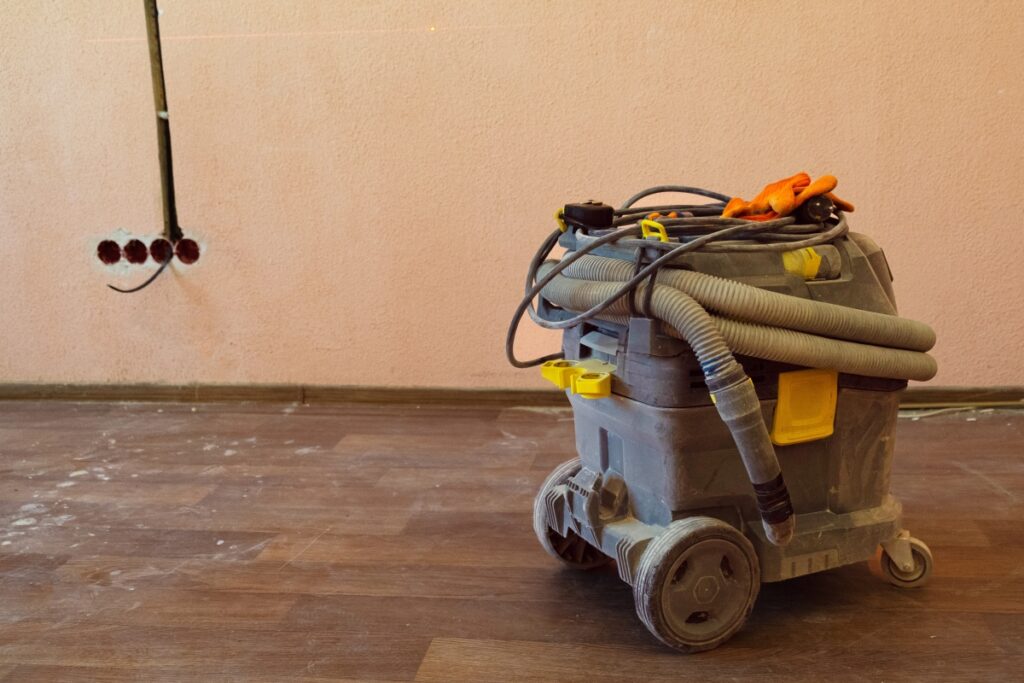
Fine construction dust can stay airborne for days and settles long after the trades have packed up. That is why a building that looked spotless on Thursday has a visible film on every horizontal surface by Monday — and why a single final wipe-down almost never holds.Post-construction cleaning is the step most projects underestimate. It gets priced as janitorial work, scheduled as an afterthought, and then compressed into whatever days are left between the punch list and the handover date. The result is a crew rushing through a building full of brand-new finishes with the wrong products and no time.Done properly, it is a staged process that runs alongside the build rather than after it. Here is what that actually looks like, what it costs you to skip, and how to tell whether a vendor has done this before.
Construction Dust Is a Different Problem
Household dust is mostly fabric fibers and skin. Construction dust is ground-up building material, and that changes how it behaves and what it does.
- The particles are finer and travel farther. Drywall sanding and concrete cutting produce particulate small enough to stay suspended, migrate through a building, and resettle in rooms nobody worked in.
- Some of it is a genuine health hazard. Cutting, grinding, or drilling concrete, masonry, and some engineered stone releases respirable crystalline silica, which OSHA regulates closely because of what long-term exposure does to lungs.
- It migrates into the HVAC system. If the system ran during construction, dust is in the ductwork, and the first time it kicks on after handover it redistributes everything you just cleaned.
- It scratches. Grit tracked across a brand-new finished floor acts like sandpaper. Damage done during cleanup often costs more than the cleanup.
That last point is the one that catches people. A crew with good intentions and a dry broom can cause thousands of dollars of damage to a floor that was flawless an hour earlier.
Pro Tip: Ask any vendor what they vacuum with. On a dusty site the answer should involve HEPA filtration — a shop vac without it just redistributes the fine particulate into the air.
The Three Phases, and Why Collapsing Them Fails
Experienced construction cleaning crews work in stages that interleave with the trades. Trying to do it all at the end is what makes projects miss handover dates.
| Phase | When It Happens | What It Covers |
| Rough clean | After framing, drywall, and the messiest trades, before finish work | Debris removal, sweeping and vacuuming bulk material, clearing surfaces so finish trades can work, wiping down to knock back the dust load |
| Final clean | After finish trades are substantially done | Full detail of every surface, glass and fixtures, adhesive and sticker removal, floors brought to finished condition, restrooms and fixtures commissioned |
| Touch-up clean | Immediately before handover or move-in | Correcting anything disturbed by punch-list work, fingerprints, final glass, fresh dust on horizontal surfaces |
The reason this sequence matters is simple: cleaning before the dust-producing work is finished wastes the money, and cleaning only at the end means the finish trades worked in a dirty building and the final clean has to do three jobs at once.
Pro Tip: Build the rough clean into the project schedule rather than calling for it when the site gets bad. Crews that arrive on a planned date cost less than crews that arrive on an emergency one.
The Surfaces That Cause the Most Trouble
Nearly every expensive post-construction cleaning mistake involves using a reasonable product on an unreasonable surface.
| Surface | What Goes Wrong | What the Crew Needs to Do |
| New hard flooring | Grit scratches it, aggressive chemicals strip or dull uncured finish | Remove grit before any wet work, use products the flooring manufacturer approves, check cure times |
| Glass and windows | Adhesive labels, paint overspray, mineral spatter from concrete work | Correct scraping technique and the right solvent — the wrong blade angle permanently scratches glass |
| New grout and tile | Grout haze and cement film look like dirt and resist normal cleaners | Specific haze removal, not repeated scrubbing with general-purpose product |
| Stainless and plumbing fixtures | Protective film adhesive, hard water spotting, scratches from abrasives | Non-abrasive methods, immediate drying |
| Painted walls and trim | Fresh paint is still curing and marks easily | Dry methods where possible, minimal moisture, no scrubbing |
| HVAC registers and ductwork | Dust reservoir that recontaminates the whole building | Clean before commissioning, coordinate with the mechanical contractor |
| Light fixtures and high surfaces | Skipped entirely, then obvious the first evening the lights are on | Top-down sequence, high dusting before floors |
Top-down is the whole discipline in one phrase. Clean the floors first and you will clean them again.
What Drives the Cost
Post-construction cleaning quotes vary more than almost any other commercial cleaning work, because the variables are genuinely different from project to project. The things that move the number most:
- Glass area. Windows and glass partitions are labor-intensive, especially with adhesive labels or overspray. A curtain-wall building costs far more to clean than its square footage suggests.
- New tile and grout. Haze removal is slow, specific work. A lot of new tile changes a quote substantially.
- Floor type and condition. Polished concrete, hardwood, VCT, and luxury vinyl all have different requirements, and some need the finish addressed rather than just cleaned.
- Number of phases. Three scheduled visits cost more in total than one, but usually less than one emergency visit plus the rework that follows.
- How clean the site is when the crew arrives. A site where trades cleaned up after themselves is a cheaper final clean than one where they did not.
- Compressed schedules mean more people on site at once, sometimes overnight, which carries a premium.
Pro Tip: Ask for the quote broken out by phase rather than as one number. It makes the tradeoffs visible, and it lets you scale a phase up or down as the project schedule shifts.
Who Does What, and Where Liability Sits
This is worth settling in writing before anyone starts.
- Construction debris removal is usually the contractor’s scope. Lumber offcuts, packaging, and bulk material are generally not a cleaning vendor’s job. Confirm the line.
- Damage during cleanup is a real exposure. A scratched floor or etched glass discovered at handover becomes an argument. Verify the vendor carries meaningful liability coverage before they are on site.
- Finish manufacturers’ requirements govern. If a flooring warranty specifies approved cleaning products, using something else can void it. Collect those documents and hand them to your cleaning vendor.
- Someone has to own the HVAC question. Whether the ductwork needs attention before commissioning is a decision, not an assumption.
Pro Tip: Walk the building with your cleaning vendor before the final clean, not after. A twenty-minute walkthrough catches the surfaces that need special handling while there is still time to get the right product on site.
Seven Questions to Ask Before You Hire
- Have you done post-construction work specifically, and on what kind of projects? General commercial experience is not the same thing.
- Do you vacuum with HEPA filtration? On a dusty site this is basic.
- How do you handle silica dust and the safety side of it? You want a real answer about equipment and training.
- What is your process for grout haze and adhesive removal? These are the two tasks most crews get wrong.
- Will you follow finish manufacturers’ product requirements if we provide them? Protects your warranties.
- What insurance do you carry, and can I see a certificate? New finishes mean real liability.
- Can you staff a rough clean, final clean, and touch-up on our schedule? Elastic capacity matters more here than anywhere.
If you are weighing a vendor change more broadly, our guide to
hiring local business cleaning services covers the general evaluation process.
How We Approach Post-Construction Cleaning
Mountain Group is a commercial cleaning company, and our
construction cleaning services are built to run alongside a project rather than get squeezed in at the end.Here is what we bring to a construction account:
- Phased scheduling. Rough, final, and touch-up quoted and planned as separate stages, so you are not paying to clean the same room three times by accident.
- Background-checked, trained staff. Every team member is background checked and trained on confidentiality and privacy before entering a client site.
- $5,000,000 commercial general liability coverage. We are bonded and insured. On a building full of new finishes, ask every vendor for a certificate before they start.
- A signed checklist on every visit. Our staff sign off on each visit, which gives you a record of what was completed and when — useful when a punch list is in dispute.
- Product selection by surface. If you provide finish manufacturers’ requirements, we follow them. Where we have latitude, we default to eco-friendly products and ask before using anything more aggressive.
- Two-hour response and a 24-hour re-clean guarantee. If something is missed before a handover walkthrough, we fix it inside a day at our cost.
- 24/7/365 scheduling. Handover dates do not move for convenience, so we work around them.
For buildings that need ongoing service once occupied, our
janitorial cleaning services and
facilities cleaning pick up where the construction scope ends. If the project is a warehouse or industrial space, our guide to
warehouse deep cleaning covers what changes at that scale.We serve the Minneapolis and St. Paul metro from our Edina office — see our
service areas. Call
(952) 856-0613 or
request a free estimate, and we will walk the project, map the phases against your schedule, and quote each stage separately. No obligation.
Frequently Asked Questions
What is included in post-construction cleaning?A full scope covers debris and dust removal, detailed cleaning of all surfaces from the ceiling down, glass and window cleaning including adhesive and overspray removal, fixture and restroom commissioning, grout haze removal where there is new tile, and floors brought to finished condition. Most projects run this in three phases rather than one visit.
How is post-construction cleaning different from regular commercial cleaning?Construction dust is finer, more abrasive, and sometimes hazardous, and the surfaces being cleaned are brand new and easily damaged. The work needs HEPA vacuuming, surface-specific products, correct sequencing from the top down, and crews trained on the safety side. Regular commercial cleaning assumes cured finishes and ordinary soil.
When should post-construction cleaning be scheduled?In stages. A rough clean after the messiest trades finish, a final clean once finish work is substantially complete, and a touch-up immediately before handover or move-in. Collapsing it into one end-of-project visit is the most common scheduling mistake and usually costs more.
Who removes construction debris, the contractor or the cleaning crew?Usually the contractor handles bulk construction debris such as lumber, packaging, and material offcuts, while the cleaning vendor handles dust, fine debris, and detailed surface work. This boundary varies, so it is worth confirming in writing before work starts.
Does the HVAC system need cleaning after construction?If the system ran during construction, dust is likely in the ductwork, and it will redistribute through the building the first time it operates after handover. Whether the ducts need attention should be a deliberate decision made with the mechanical contractor rather than an assumption either way.
How much does post-construction cleaning cost?Cost depends on square footage, the number of phases, how much glass and new tile is involved, floor types and their requirements, and the handover timeline. Mountain Group quotes each phase separately and provides free on-site estimates.
Start With the Schedule, Not the Quote
The projects that handle this well are not the ones that found the cheapest crew. They are the ones that put rough clean, final clean, and touch-up on the construction schedule early, so the cleaning happens when it is useful instead of when there is nothing left but panic.Pull up your current project calendar and find the date your messiest trades finish. That is when the first phase should start, and it is almost always earlier than people expect.